Getting the low end right is probably one of the most important parts of producing electronic music. It's also one of the things producers struggle with the most.
In genres like Trance, Progressive Trance and Melodic Techno, the kick and bass are a huge part of the energy of the track. You can have great melodies, expensive synths and a massive breakdown, but if the kick and bass don't work together, the whole production can feel weak.
And the solution isn't simply making the kick louder or adding more bass.
A powerful low end comes from making the kick and bass work together.
Let's see how.
1. Start With the Right Kick and Bass
Before reaching for an EQ, compressor or sidechain plugin, listen to the sounds you're using.
One of the most common mistakes is trying to fix the wrong sounds with processing.
If your kick has a very long and heavy sub tail and your bass also has a lot of sub energy, they're naturally going to fight for the same space. You can EQ them, compress them and process them as much as you want, but sometimes the problem is simply the sound selection.
For Trance and Progressive, I normally look for a kick with a clear transient, a controlled low end and enough information in the mids and highs to cut through the mix.
Melodic Techno can work really well with deeper or rounder kicks, but the same idea applies.
The longer and bigger your kick tail is, the more space you'll need to leave for it in the bass.
And most importantly, listen to the kick and bass together. A kick doesn't need to sound absolutely massive on its own.
It needs to sound massive when the bass is playing with it.
2. Decide Who Owns the Sub
One thing that helps a lot is deciding where the deepest part of your low end is actually coming from.
Is it mainly the kick?
Or is it the bass?
There's no correct answer here. Both approaches can work.
In some Trance productions, the kick has a strong fundamental and the bass sits slightly above it. In other tracks, especially Progressive or Melodic Techno, the bass can have a lot more presence in the sub area while the kick cuts through it.
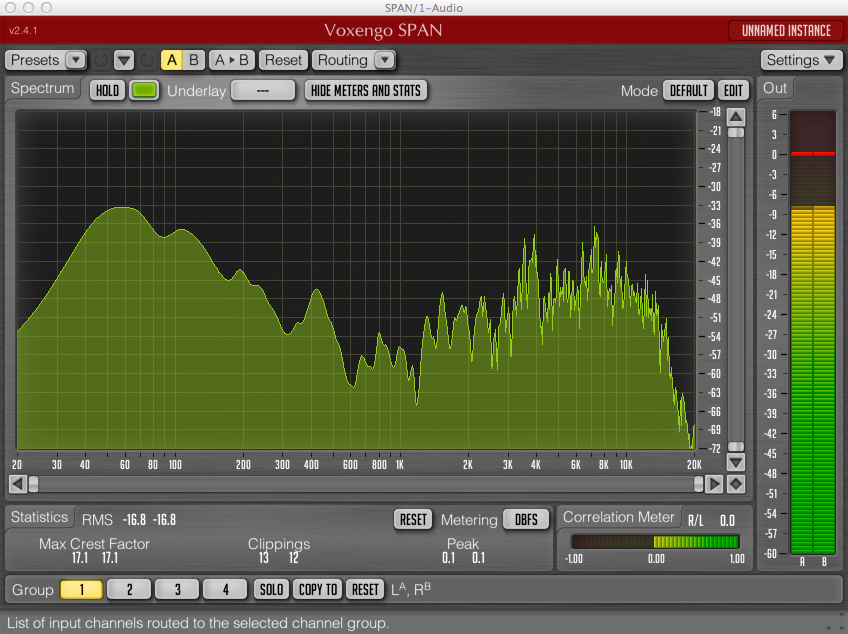
Use a spectrum analyzer and see what's actually happening.
For example, maybe your kick has most of its fundamental energy around 50 to 60 Hz, while the bass is stronger around 70 to 100 Hz.
Great. There's already some natural separation there.
The problems usually start when both sounds are producing a lot of energy in exactly the same area.
3. Remove Low-End Energy You Don't Need
Very low frequencies take up a surprising amount of headroom.
Sometimes there's energy down there that you can barely hear, but your compressor, clipper or limiter definitely sees it.
A gentle high-pass filter can help clean things up, but don't just automatically cut everything below a certain frequency.
That's not the point.
The idea is to remove low-end information that isn't doing anything useful.
This becomes especially important when you're working with layered basses.
A typical Trance bass might have:
- A sub layer
- A main bass
- A mid bass
- An attack or texture layer
They don't all need sub.
If you already have a dedicated sub layer, there's usually very little reason for another three bass layers to also produce a lot of energy at 40, 50 or 60 Hz.
Give every layer a job.
4. Create Space Between the Kick and Bass
Once you've chosen sounds that work well together, check where the strongest frequencies are.
Let's say your kick has a strong fundamental around 55 Hz.
If your bass also has a big resonance at 55 Hz, you might have a problem.
Instead of boosting the kick even more, try reducing that area slightly in the bass.
The same works the other way around. If there's an important part of your bass around 90 Hz and the kick has unnecessary energy there, a small reduction in the kick might make everything clearer.
And we're not talking about huge EQ moves.
Sometimes 1 to 3 dB is more than enough.
You're just trying to give both sounds a little bit of their own space.
5. Sidechain Is Part of the Groove
In Trance and Melodic Techno, sidechain isn't just something we use to fix a mixing problem.
It's part of the sound.
Every time the kick hits, the bass moves out of the way for a moment. This gives the kick space, but it also creates the movement and groove we associate with these genres.
The important part is getting the shape right.
If there's not enough sidechain, the low end can become messy.
If there's too much, the bass disappears every time the kick hits.
Pay attention to how quickly the bass comes back.
At faster Trance tempos, there isn't much time between kicks, so the bass usually needs to recover fairly quickly.
With Progressive or Melodic Techno, you might want a slower and more obvious pumping effect.
Don't choose your sidechain curve just because it looks nice on the screen.
Close your eyes and listen to the groove.
6. Check the Phase
This is something that can drive you crazy.
Your kick sounds great.
Your bass sounds great.
You play them together and suddenly the low end feels smaller.
Phase could be the problem.
Low frequencies have long wavelengths, and when two similar frequencies overlap with the wrong phase relationship, they can partially cancel each other.
Try changing the starting phase of the bass oscillator or moving the bass very slightly in time.
Sometimes a tiny adjustment completely changes the low end.
This is especially important with synthesized sub basses because their phase can be very consistent from note to note.
You don't need to obsess over getting everything perfectly aligned.
Just find the relationship where the kick and bass feel strongest and most stable together.
7. Bass Isn't Just Sub
This is another really important point.
If your bass sounds huge on your studio monitors but completely disappears when you play the track on a phone or laptop, you're probably relying too much on the sub frequencies.
We don't only perceive bass through the fundamental.
The harmonics are incredibly important too.
Saturation, distortion or additional layers can add information higher up in the frequency spectrum. That means the bass can still be heard on speakers that aren't capable of reproducing 40 or 50 Hz properly.
This is particularly important in Trance.
A good rolling bass isn't just a big sub. A lot of its character comes from the relationship between the low end and the harmonics above it.
A simple way of thinking about it is this:
You want to feel the sub and hear the bassline.
Those are two different things.
8. Process Your Bass Layers Together
If you're using several bass layers, route them to a bass bus.
You can still process each layer individually, but at some point they need to work as one instrument.
A little EQ on the bus can help with the overall tonal balance.
Some subtle saturation can glue the layers together and add harmonics.
Compression can also work, but don't compress the bass bus just because you think you're supposed to.
Listen first.
Does the bass feel like one sound?
Or can you clearly hear three different synth patches playing at the same time?
If it's the second one, I'd go back to the sound design before adding another five plugins.
9. Stop Mixing Everything in Solo
Solo is useful. I use it all the time to find problems.
But nobody is going to listen to your bass in solo.
After making your adjustments, put the whole track back in.
Sometimes a bass that sounds slightly thin on its own works perfectly once the leads, drums and everything else are playing.
The same thing happens with kicks.
A kick that sounds absolutely enormous in solo might be taking up so much space that there's nothing left for the bass.
Context is always more important.
10. Use Reference Tracks
This is probably one of the easiest ways to understand whether your low end is actually working.
Pick a professionally released track that's genuinely similar to what you're producing.
If you're making uplifting Trance, compare it with uplifting Trance.
If you're making Progressive Trance, don't compare your low end with some huge peak-time Techno record and wonder why yours sounds different.
Listen to the relationship between the kick and bass.
How loud is the kick?
How much sub is actually there?
How audible is the bass above the sub frequencies?
How much does the bass move when the kick hits?
How dense does the whole low end feel?
And always try to level-match the reference.
If the reference is 3 dB louder than your track, of course it's probably going to sound bigger.
The Most Important Thing
There's no magic EQ setting for getting a professional low end.
It's normally a combination of small decisions:
Sound selection, frequency balance, phase, sidechain, harmonics and levels.
If the kick and bass already work well together before you start doing heavy processing, everything becomes much easier.
So don't spend all your time trying to make the biggest kick possible.
And don't try to make the biggest bass possible either.
Try to make the kick and bass together sound big.
That's what actually matters.